Govt unveils school zone safety guidelines with proposed 30kph speed limit

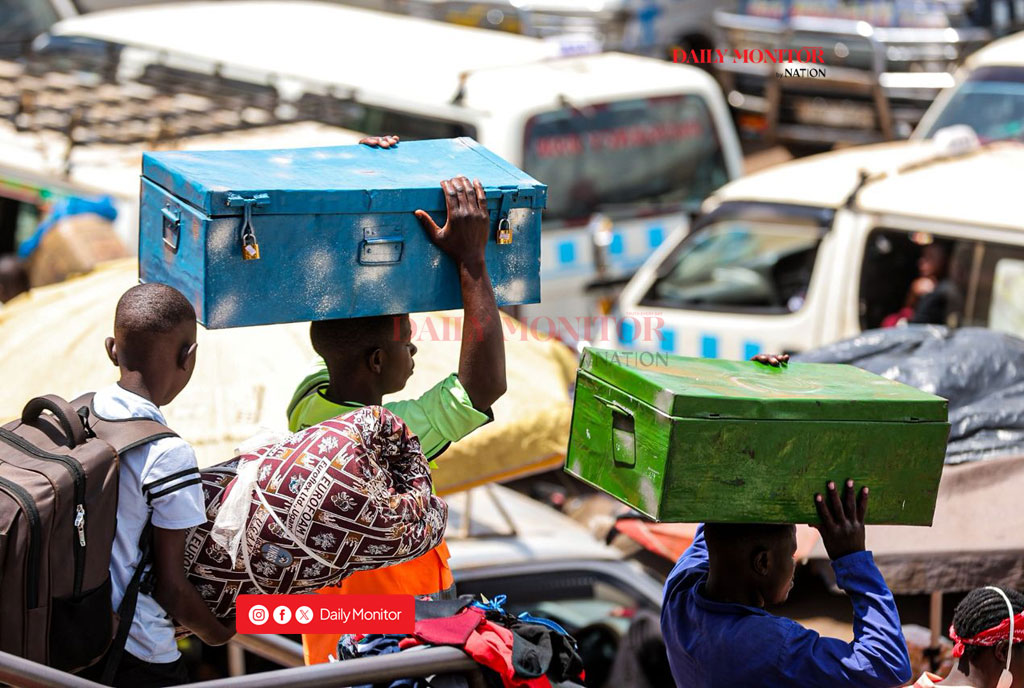
Students wait to board a taxi at the Old Taxi Park in Kampala on February 8, 2026 as Term One of the 2026 school calendar resumes. PHOTO/IBRAHIM KAVUMA.
What you need to know:
- Government targets speeding and unsafe boda bodas in school zones.
The Ministry of Works and Transport has unveiled new guidelines aimed at establishing safer school zones across Uganda, including a proposed 30-kilometre-per-hour speed limit around schools, as authorities intensify efforts to protect learners from road crashes ahead of school reopening on Monday.
Officials said the framework seeks to reduce accidents involving children, particularly in high-traffic and densely populated areas near schools, hospitals and markets.
The guidelines were discussed during a stakeholders’ engagement under the Safe Kids, Save Future road safety campaign held on May 22, bringing together school administrators, learners and road safety stakeholders ahead of term two.

Michael Kamoga said the ministry had already developed the framework to guide the gradual rollout of safer school environments nationwide.
“As the ministry, we have recently developed a guide for safe school zones in Uganda. We shall ensure we have pedestrian crossing facilities, signposts as well as barriers to protect pupils from crashes,” Mr Kamoga said.
He explained that the ministry, working with traffic police and partners under the Intelligent Transport Monitoring System (ITMS), would enforce the proposed 30kph speed limit in school zones and other built-up areas.
Mr Kamoga said local governments would help identify priority areas for intervention before road safety infrastructure is installed.
He also urged schools seeking road safety measures such as humps and pedestrian crossings to formally petition the ministry and local governments for assessment and approval.
“If you write to the Permanent Secretary, Ministry of Works and Transport, the process will begin with inspection and recommendations before implementation,” he added.
Michael Kananura warned motorists, boda boda riders, school administrators and parents against reckless road behaviour, saying human error remains the leading cause of accidents.
“Drive on the road as if every child on the road is your own child,” Mr Kananura said.
He noted that nearly 95 percent of road crashes are linked to human behaviour, including speeding, drunk driving, negligence and overloading.
Mr Kananura criticised schools that employ unqualified drivers and highlighted dangerous boda boda practices involving multiple children being transported on a single motorcycle.
“We recently arrested a rider carrying nine children on one motorcycle,” he said.
The Safe Kids, Save Future campaign, conducted between November 2025 and April 2026, reached about 9,700 pupils in 12 primary schools across Kampala, Mbale, Fort Portal and Mbarara through road safety awareness sessions.
More than 4,000 road safety materials, including reflective vests, arm bracelets, crash helmets and educational bookmarks, were distributed during the campaign.
Steven Turyarugayo said the initiative had demonstrated the importance of combining education, technology and partnerships to improve road safety awareness among children.
“We are building a generation that embraces safer road-use behaviour and digital road safety solutions,” he said.
Daniel Nuwabine said the campaign had exposed the urgent need for improved pedestrian infrastructure around schools, particularly in Kampala.
“The campaign has revealed the urgent need for enhanced pedestrian infrastructure, especially around high-traffic school zones,” Mr Nuwabine said.


